How the fight over unionization is becoming a battle over N.J.’s billion-dollar legal weed industry
A partnership unravels
When 52-year-old former U.S. Marine Osbert Orduña opened The Cannabis Place in Jersey City on Nov. 9, 2023, he pitched the dispensary as more than just another cannabis business.
The dispensary on John F. Kennedy Boulevard featured a community room and positioned itself as a neighborhood gathering place.
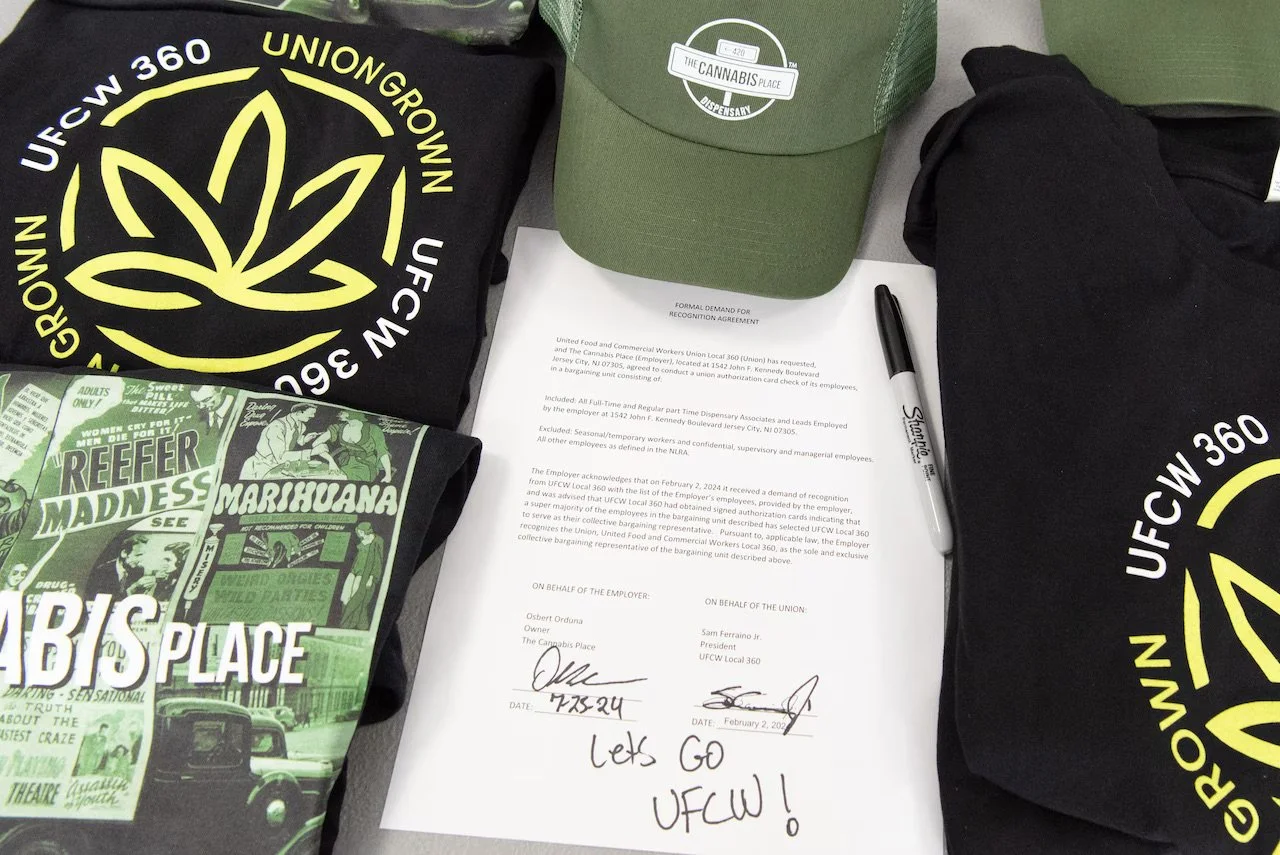
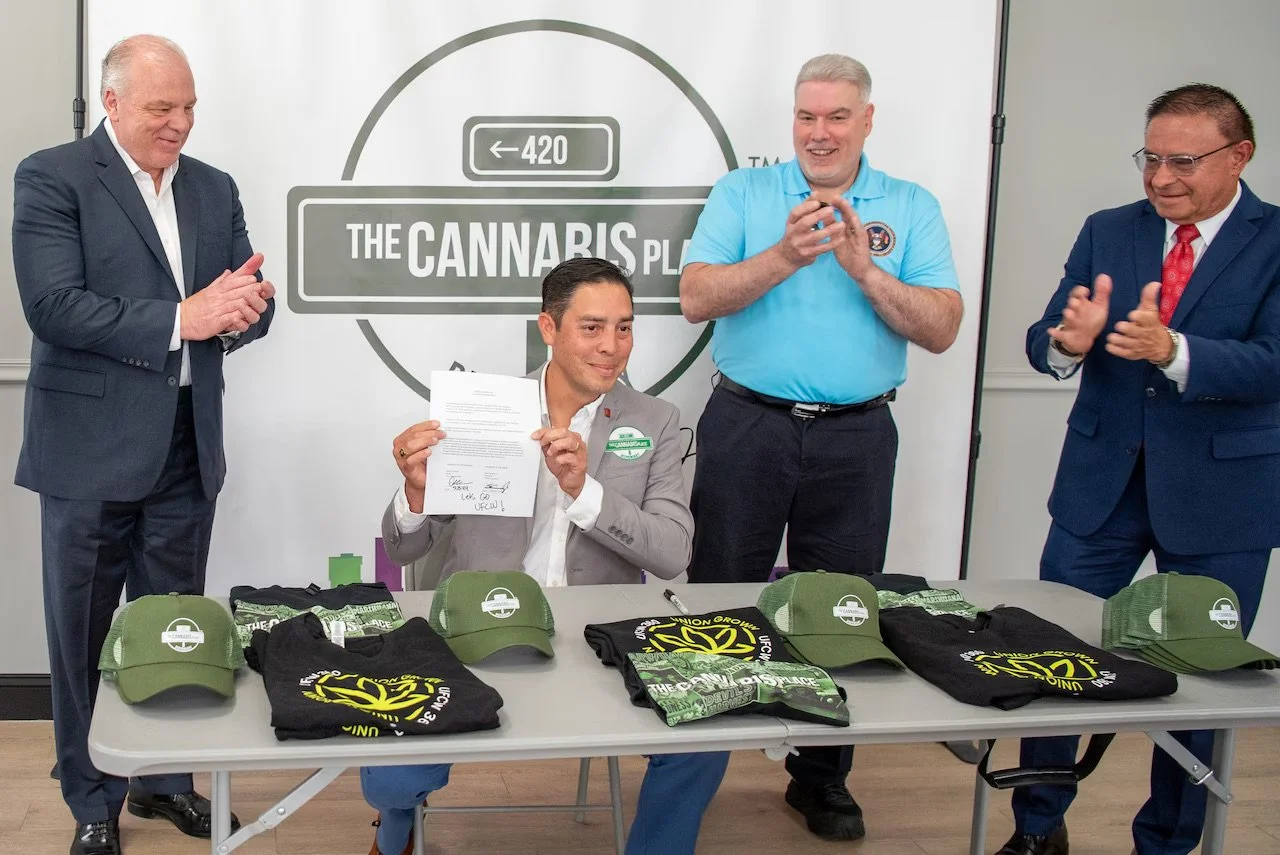
Several months later, in 2024, the dispensary became the backdrop for a celebration of organized labor. Banners and promotional materials filled the building as union officials, local leaders and former Senate President Steve Sweeney gathered to mark the signing of an agreement between The Cannabis Place and the United Food and Commercial Workers Union, or UFCW.
Sweeney, one of the chief architects of New Jersey’s cannabis legalization law, had championed a provision requiring cannabis businesses to enter labor peace agreements with labor organizations. The agreements meant companies would allow unions access to their stores and neither side would engage in hostile actions toward the other.
At the event, Sweeney pointed to Orduña’s decision to go the extra step and recognize a union shortly after opening as proof the system was working “exactly the way it was supposed to be.”
Orduña was with UFCW Local 360 Executive Vice President Hugh Giordano as the agreement was signed.
Giordano, who brokered the deal, shook Orduña’s hand and watched as pictures were taken. The two men had known each other for months throughout the process, and this photo-op had been the culmination of that relationship thus far.
But now, the two men and the entities they represent find themselves on opposite sides of a federal lawsuit.
The Jersey City cannabis dispensary that once celebrated its partnership with the state’s largest cannabis union is now suing New Jersey’s cannabis labor law, arguing it has effectively created a one-union monopoly.
Now there is no union recognition celebration, and there is no peace between the two.
The dispute begins
When Orduña had a falling-out with the UFCW over contract renegotiations this year, his lawsuit alleges the store opted to go to other unions instead.
The lawsuit alleges that the store went to every available labor organization it could find, but none would challenge the UFCW. Orduña argues that the situation creates an effective monopoly that is backed by cannabis regulators who, under the law, will not renew the license of an operator that does not have a peace agreement with a union.
“New Jersey’s mandate doesn’t protect workers; it creates a state-sponsored cartel that holds minority and veteran entrepreneurs hostage,” Orduña said.
Both the state Attorney General’s Office and the Cannabis Regulatory Commission (CRC) declined to comment.
The legal fight has also spilled into a separate dispute with Jersey City. Court records show a federal judge temporarily blocked the expiration of The Cannabis Place’s local cannabis license after the Jersey City Council failed to approve a renewal measure due to the dispute.
The Cannabis Place’s suit appears to be the first challenge brought by an independent dispensary against the state’s labor peace agreement requirement. One of the state’s largest cannabis operators, Curaleaf, filed a similar lawsuit last year. Another major cannabis operator, Verano, also filed suit this year.
In legal documents, state regulators argue that The Cannabis Place is not facing immediate harm because the CRC has administratively approved the company’s license renewal and has not issued a Notice of Violation while the Curaleaf case proceeds.