New Jersey lawmaker improperly took advantage of marijuana law, former aide says in lawsuit
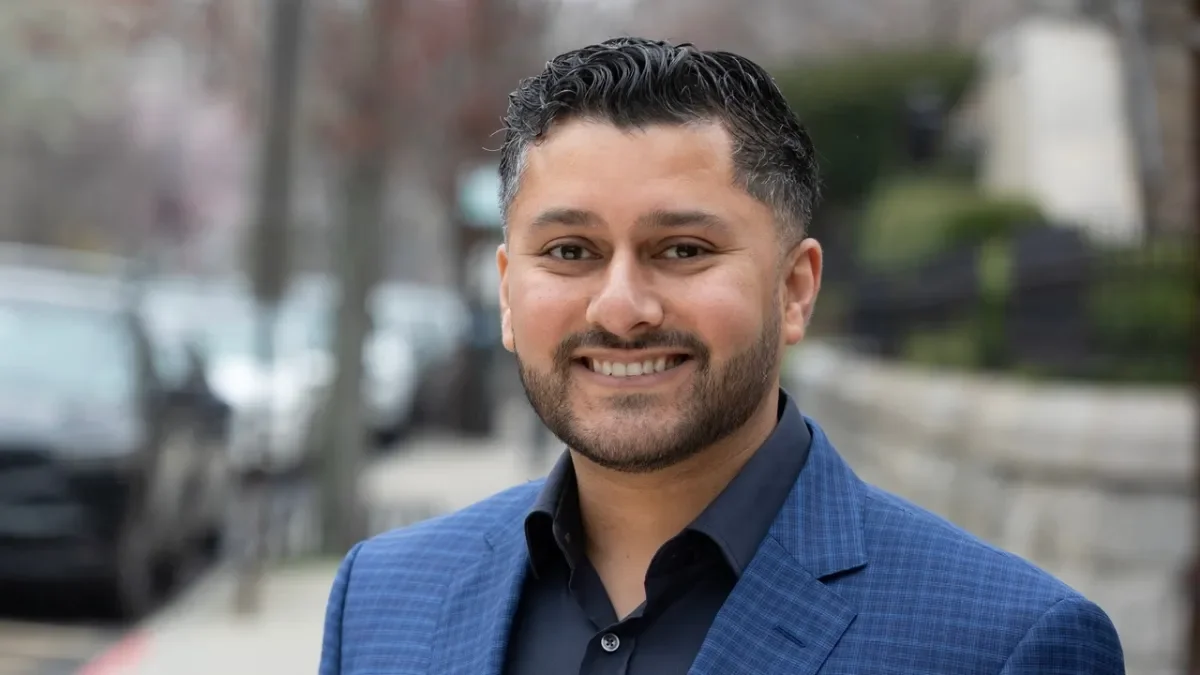
When New Jersey legalized marijuana, it wrote rules that gave minority- and women-owned businesses and other disadvantaged applicants a head start on licenses. A new lawsuit alleges a state lawmaker turned that policy into a business model.
State Sen. Raj Mukherji, a Democrat who has had ownership interests in dispensaries in several states, recruited people from his political circle to serve as majority “owners” of pot shops they did not truly control, then swapped those partners with other operators so each could claim the state’s licensing preference, according to the lawsuit filed by his former chief of staff.
Justin Shoham, a Democratic political consultant, says he was one of those names on paper: the 60% owner of a dispensary in Springfield, N.J., that, according to his 12-count lawsuit, was actually run by a national cannabis executive and a management company bearing Mukherji’s initials, who then saddled it with more than $4 million in debt and was shut down within a year. He says he was promised $180,000 for his stake and never got it.
He also says he has Mukherji — the alleged “central decision-maker” and “recruiter” in the scheme — on tape explaining the arrangement.
“Wherever I have a minority or woman ... at 60% they have their person at 40% and where they have their cannabis convict or social equity minority ... at 60% I have my person at 40%,” Mukherji said in a recorded 2022 phone call, according to the lawsuit against Mukherji and several cannabis industry players and companies, filed Wednesday in Union County Superior Court.
Mukherji in a statement said he was “stunned” to find himself named in the suit and had not been named in one of the companies prominently cited in it “for 2 or 3 years.”
What the lawsuit alleges
Shoham, who’s half Colombian and worked for two years as Mukherji’s chief of staff, alleges the senator recruited him to be the 60% owner of a dispensary in Springfield under the promise that he would eventually be bought out for at least $180,000.
But Shoham alleges that Mukherji, along with another cannabis executive, ultimately cheated him out of the money — all the while extracting huge payments from his company while loading it with debt and obligations that would ultimately make it worthless. Shoham also alleges he was promised $191,500 for consulting and political support for a planned Mukherji-co-owned dispensary in Union Township that did not open, but never received it.
Senator pushes back on claims
Mukherji, however, said there was nothing unusual about the arrangement.
“He was a trusted part of my alumni squad, and I was just trying to help him out with this introduction and an opportunity to make $180K without putting up a penny of capital and doing little work, comparatively,” he said, adding that because of tax considerations and the fact that Shoham was not a known industry figure, “countless industry participants are using the same model to minimize the value of the license holder when you exit.”
“But they never got to exit, because [Shoham] apparently blew up the deal by spooking the buyer,” Mukherji said. “I even tried to help him after I was out of the business, but they said he kept re-trading the deal and the store never even opened. No good deed goes unpunished.”
Though Mukherji’s name does not appear on EMNJ’s business certificates filed with the state, Shoham alleges that the first two letters in its name stand for Epstein-Mukherji. Aaron Epstein, another defendant, is a manager/member of EMNJ, according to state business documents, and has been quoted in news sources as an attorney for CannTech, a Mukherji-led cannabis business. Epstein did not respond to a request for comment.