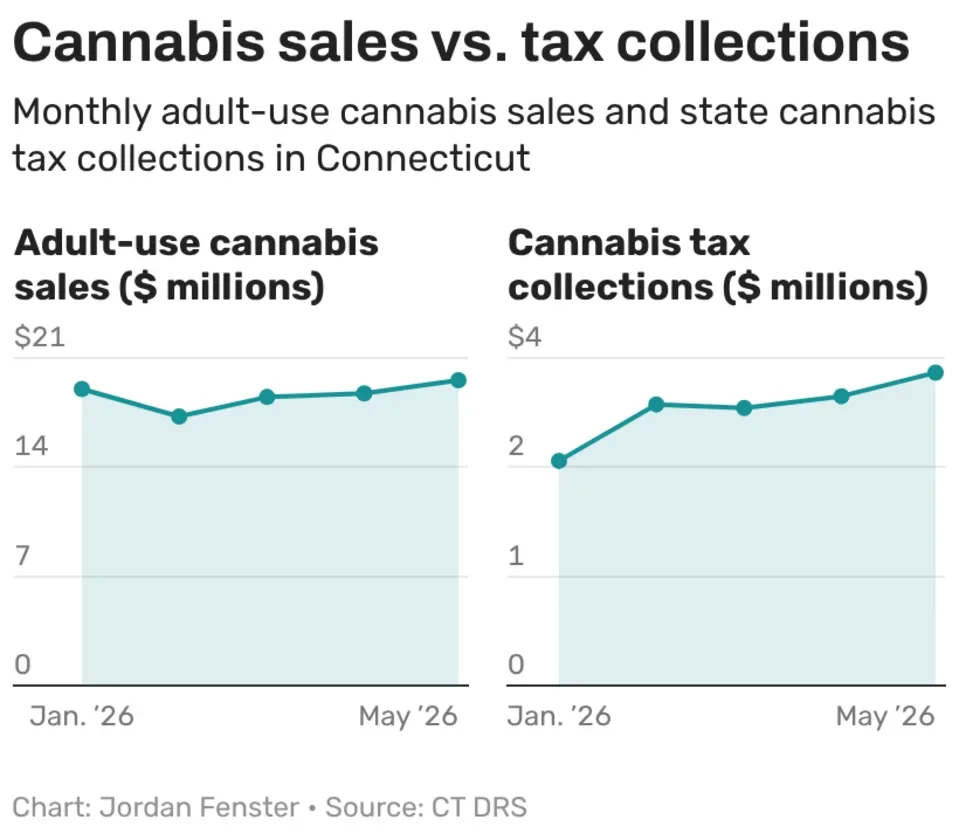
Connecticut collected far more in cannabis taxes during the first part of this year than it did a year ago, even though consumers spent only slightly more at dispensaries.
The state collected about $12.45 million through its cannabis potency tax from January through April, up from roughly $7.44 million during the same period last year. That's an increase of about 67%, according to state Department of Revenue Services data.
Cannabis sales, however, were nearly flat.
Connecticut retailers recorded about $95.3 million in combined recreational and medical cannabis sales through April, up about 1.6% from the same period in 2025, according to an analysis of Department of Consumer Protection data. Adult-use sales, which are subject to the cannabis tax, rose about 7%, while medical sales continued to decline.
The gap is partly a product of the way Connecticut taxes cannabis, a system that lawmakers have already decided to change. Unlike a traditional sales tax, Connecticut's current cannabis excise tax is based on the amount of THC in a product, not its price.
The state charges 0.625 cents for each milligram of THC in cannabis flower, 2.75 cents per milligram in edibles and 0.9 cents per milligram in other cannabis products. Those charges come on top of the state's 6.35% sales tax and a 3% municipal cannabis tax.
That means the cannabis tax on a product can stay the same even as its retail price falls. As prices have dropped across Connecticut's legal market, the potency tax has become a larger share of the price consumers see at the register.
Beginning Oct. 1 though, Connecticut will eliminate the THC-based taxand instead impose a 10.75% tax on a retailer's cannabis gross receipts. The 6.35% state sales tax and 3% municipal tax will remain.
"We're incredibly excited to see the tax structure change to a flat tax on October 1," said Ben Zachs, owner of Fine Fettle. "The current tax structure is an absolute nightmare for customers. With declining prices, but a tax based on potency, the effective tax rate can be up to 35% on certain products."