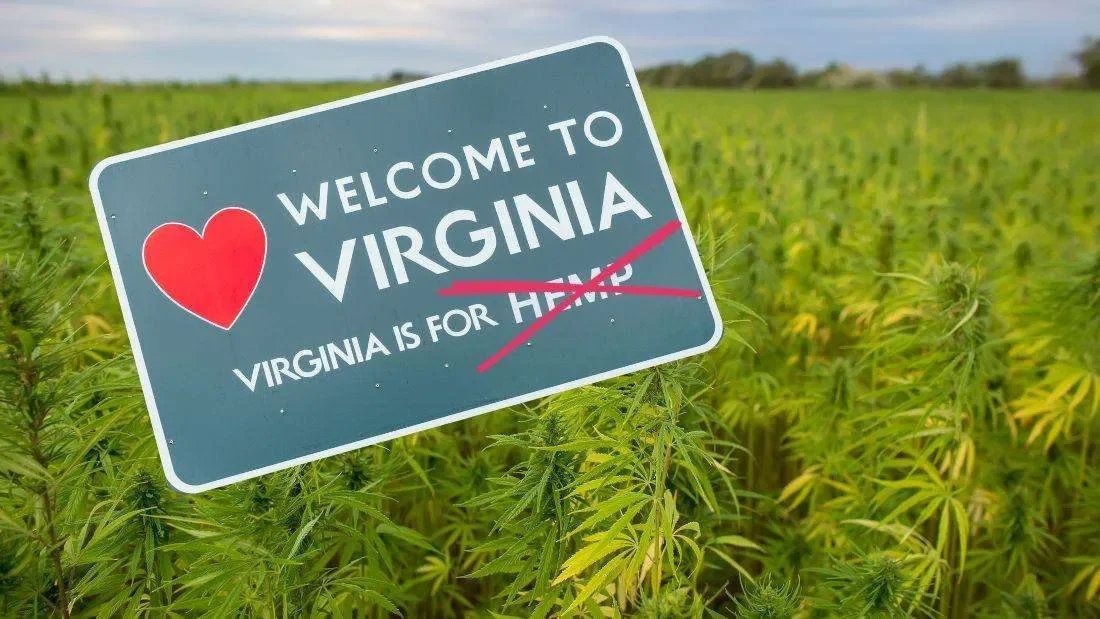
If you’ve been wondering why cannabis is legal to possess in Virginia, but there’s still no clear, safe place to buy it without a medical card, you’re not alone. And the answer is more complicated (and more frustrating) than it should be.
For years, hemp businesses in Virginia have been stuck in a strange sort of limbo where we are expected to follow the rules, invest in compliance and educate our communities. At the same time, the state itself has struggled to consistently enforce the very laws it passed and continues to delay any meaningful path to recreational adult-use sales. The end result is an uneven playing field that punishes businesses trying to do things the right way and rewards those who ignore the rules entirely.
How did we get here? (A timeline)
2018: The Farm Bill opens the door — and the loopholes The 2018 Farm Bill (Agriculture Improvement Act) legalized hemp (defined as anything under 0.3% D9 THC) nationwide and created the modern hemp market. It also created a widely discussed regulatory gray area; a space where innovation could flourish, but so could loopholes. Over the next few years, that space kept getting pushed, stretched and exploited; a space many of us relied on to build and grow our businesses.
2021: Virginia legalizes possession without a plan Virginia legalized possession of marijuana (HB 2312/SB 1406) but never established a functioning framework for recreational sales. Consumers can legally carry cannabis, but there is no accessible adult-use retail market. That vacuum is filled by: gas stations, smoke shops, vape shops, informal and loosely regulated markets (ex: “share shops”), and overpriced dispensaries — not compliant, Virginia-owned hemp businesses. A local sheriff said it well: you can’t put the toothpaste back in the tube.
2023: The state cracks down… on paper Virginia passed SB 903, introducing a 25:1 THC-to-CBD ratio limit and requiring permits. In theory, this established clarity and safety. We thought the permit requirement would give us an advantage. And the (albeit arbitrary) 25:1 ratio allowed us to keep selling full-spectrum products and edibles. In reality, it created confusion without enforcement. State enforcement has been inconsistent; Representatives cite limited resources. They essentially rolled out inconsistent enforcement with unclear timelines, leaving compliant businesses without a stable foundation to build upon.
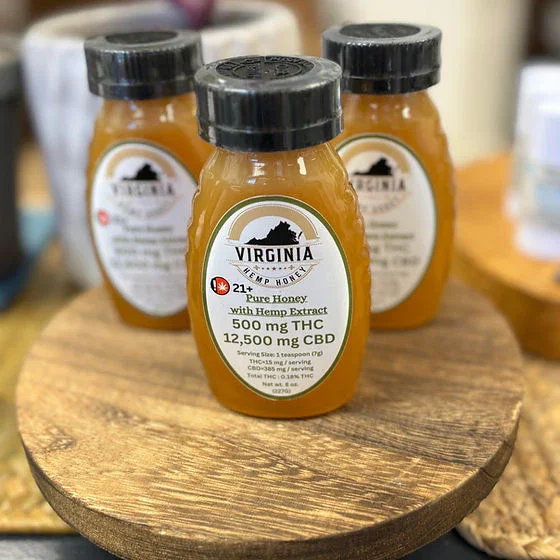
The impact on compliant small businesses
Businesses that followed the rules reformulated products, lost revenue, re-educated customers and took financial hits. Meanwhile, non-compliant sellers continued to operate, gas stations sold unregulated products and online out-of-state sellers filled the gaps. We followed the rules. They didn’t. Nothing happened.
Enforcement responsibility has been unclear, with overlapping roles between VDACS (Virginia Department of Agriculture and Consumer Services) and local law enforcement. So enforcement targets compliant businesses, while others operate freely.
2024–2025: Enforcement finally hits (selectively) Now, enforcement has increased in some areas, particularly around THCA products. This has removed key revenue streams from compliant businesses, driven customers elsewhere and continued to ignore illegal operators. We’re following rules most of the market ignores.
What comes next (the reality)
Since I originally began writing this, things have become clearer — and more urgent. The hemp industry in Virginia, as we know it, is already over — especially from the perspective of retail storefront owners. There is no reality in which minor changes or amendments bring it back. Existing regulations have already done the damage.
Our own business — one built around safety, accessibility, affordability and serving our community — will be forced to close if we do not secure a recreational license this year. That’s not a hypothetical. The current market has already made that decision for us. We’ve spent seven years building something meaningful, a space where face-to-face conversations are everything, and now we’re taking a final gamble to try to reach the finish line.
Now the conversation has shifted toward whether the current recreational bill (HB 642/SB 542), which currently sits on the governor’s desk, should be amended or delayed. This bill is not perfect, but it gets a lot of things right.
Call to action
Even if you don’t personally use cannabis, this still affects you because it determines whether small, local businesses survive, or whether the market is handed over entirely to large, out-of-state corporations.
If you care about the future of cannabis in Virginia — even a little — this is the moment to speak up. Call Gov. Spanberger’s office and tell her to sign the recreational bill as it is. Not amended. Not delayed. Signed.